Don Maycock...advising you to and through retirement!

The Vital Importance of Social Distancing

The Vital Importance of Social Distancing

Just an update that I am still working at home as normal but ceased any client or supplier meetings since March 11th. The financial companies and professionals I work with also continue to work "remotely" as the pandemic continues. You may call anytime to discuss whatever is on your mind, financial or whatever.  My advice today is to "hunker down" at this time to slow the spread as much as possible. The information below explains why.


The Vital Importance of Social Distancing

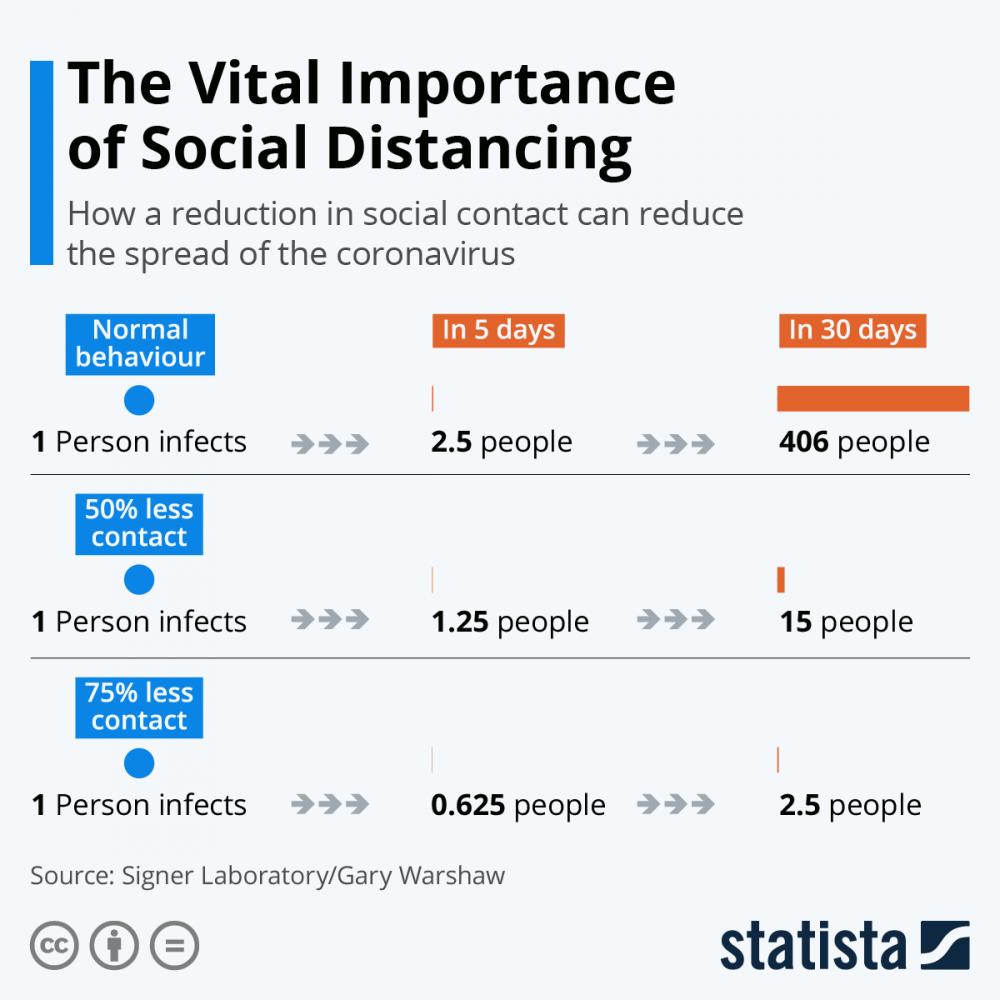
In order to stem the spread of the coronavirus, social interactions around the world are being restricted. This infographic below, based on calculations by Robert A. J. Signer, Assistant Professor of Medicine at the University of California San Diego, shows how this so-called social distancing can reduce the spread of the virus.
With no changes to social behaviour, one infected person will on average pass the virus to 2.5 people within five days. After 30 days, the figure would rise to a devastating 406 new infections. The number can be significantly reduced though by engaging in less social contact. With a 50 percent reduction, the number of new infections caused by the average person after 30 days is just 15 people. A 75 percent change would result in an even lower 2.5 new cases - greatly reducing the burden on health services and, if followed by everybody, allowing a country to 'flatten the curve' of new infections. Below is a chart showing the results of our actions today.
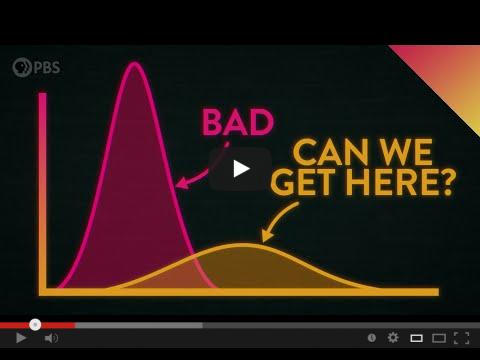
Flattening the Curve to Lessen or Stop Exponential Growth

From the chart above, if we as a society don't flatten the curve, and continue "normal behaviour", the spread of the disease will be exponential as has happened in other countries in the world. If we increase the social distancing, it will lessen the rate of spread and lessen the burden on the healthcare system. Below is a simple but very powerful video demonstrating "exponential growth". Pay particular attention to the real world example comparing Philadelphia and St Louis and the 1918 pandemic (starts at 6:45).